Wood Floor Sanding Finishes: Choosing the Ideal Sheen and Shade
If your Victorian boards look tired, your modern oak is losing its lustre, or you simply crave the silky-smooth feel of freshly renewed timber underfoot, you have probably begun Googling Wood Floor Sanding and wondering which company to trust. Picking the right craftsperson is not just about price: it is about heritage, health, home value, and long-term peace of mind. In this in-depth guide we walk you through every decision point—so that by the end you can talk the talk with any contractor and secure results you will love for decades.
Walthamstow residents are fortunate: our neighbourhood is packed with pre-war terraces, mid-century maisonettes and creative loft conversions, each hiding unique timber beneath. Yet that diversity also means there is no one-size-fits-all service. The best choice balances the species of wood, the existing finish, your allergy and environmental concerns, as well as schedule and budget. Let us demystify the process.
1. Why Refinish at All? The Hidden Wealth in Your Floorboards
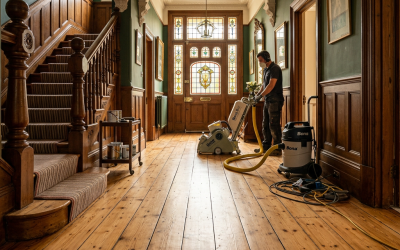
Many East London homes conceal remarkable timber beneath carpets or faded varnish. Sanding unlocks both aesthetic and financial benefits:
- Increased property value – Estate agents consistently report a premium for restored original boards.
- Health advantages – Eliminating old sealants and grime reduces indoor allergens.
- Design flexibility – Once bare, your floor can be stained Scandinavian-light, smoked-dark, or left natural with a clear oil.
- Longevity – A properly refinished floor should last fifteen years or more with minimal maintenance.
Sanding, then, is not a cosmetic whim; it is an investment with measurable returns.
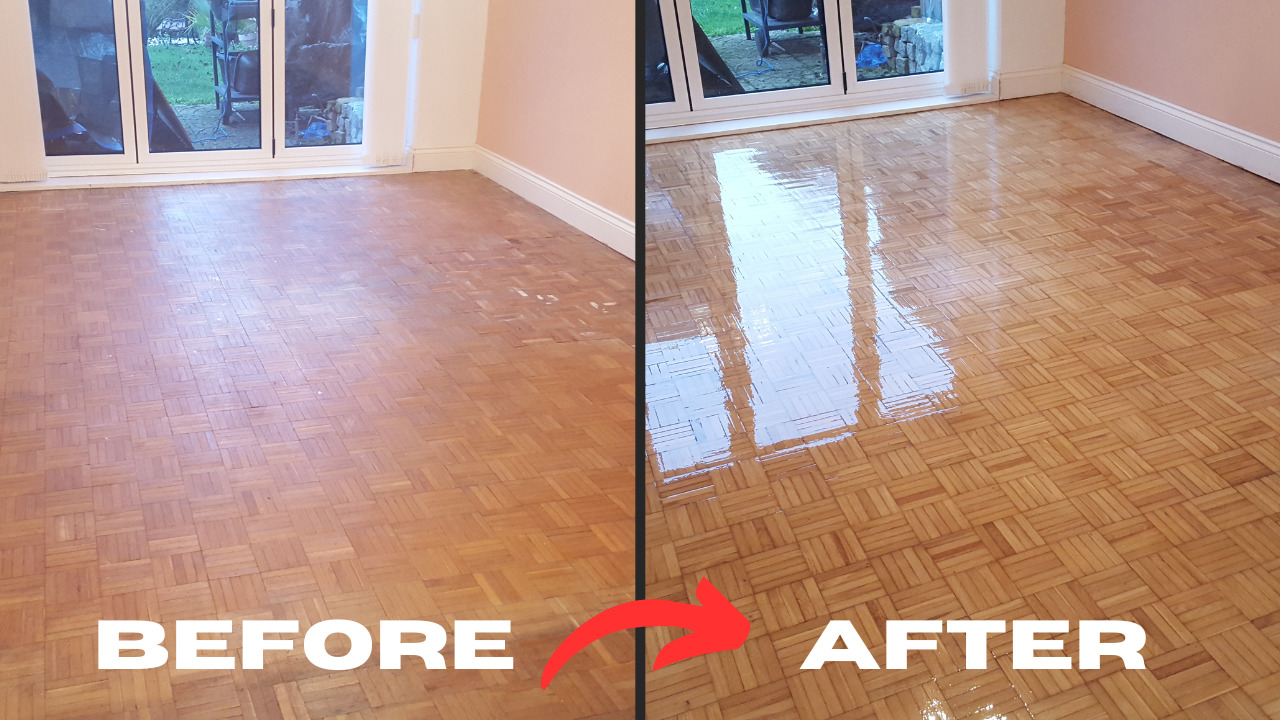
2. Understanding the Process Step by Step
Before inviting quotations, grasp the sequence of professional Wood Floor Sanding so you can recognise whether a contractor is skipping vital stages.
- Survey & Moisture Testing – A reputable firm inspects board thickness, sub-floor stability, and moisture content.
- Repair & Preparation – Loose boards are secured, gaps filled, skirtings protected, and dust sheets laid.
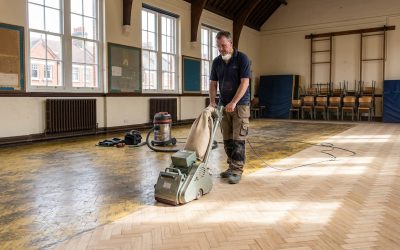
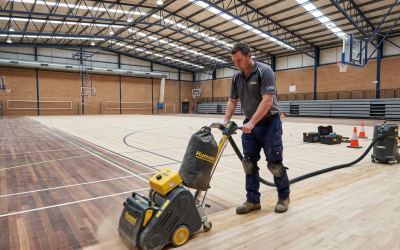
- Coarse Cut – An industrial belt sander removes the old finish with a 24–40-grit abrasive; edges follow with a separate machine.
- Progressive Smoothing – Successive passes at 60, 80, then 120-grit level the surface and erase scratch marks.
- Fine Buffing – A planetary sander blends drum and edge zones, creating a uniform canvas.
- Vacuum & Tack – Meticulous hoovering followed by solvent-damp cloths removes the finest dust.
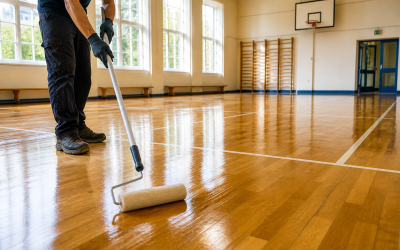
- Finish Application – Hard-wax oil, water-based lacquer, or penetrating oil is applied in multiple coats with light abrading between.
When a quote glosses over these steps, alarm bells should ring.
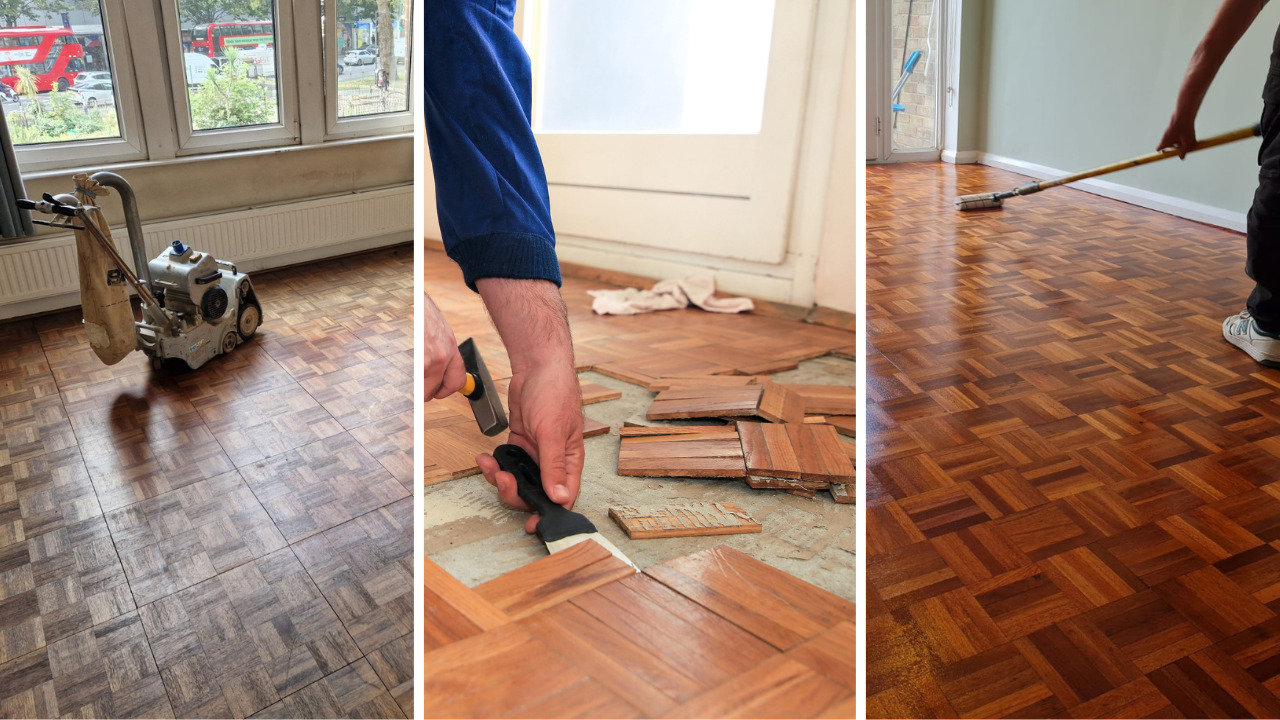
3. Setting Your Goals, Lifestyle and Budget
Knowing what you expect from the finished floor will guide the specification you request:
- Sheen Level – High-gloss bounces light but shows scratches; matt hides wear.
- Colour – Darker stains cosy up large rooms; paler tones enlarge small ones.
- Traffic – Families with pets need tougher lacquers; keen cooks may prefer oils that resist kitchen spills.
- Timeframe – Oils cure slowly; if you must walk on the floor within 24 hours, fast-dry lacquers are safer.
- Budget – Prices vary with repair complexity and finish choice. Be clear about priorities to avoid surprises.
4. Equipment and Dust Control: Breathing Easy
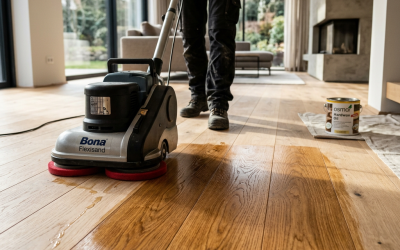
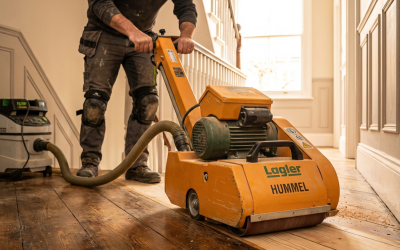
Quality finishing depends on industrial-grade kit. Listen for brand names such as Lägler Hummel, Bona Belt, and Festool CT-MIDI. Seamless hoses linking machines to HEPA-filtered extractors cut airborne particles by up to 95 percent, protecting both lungs and lacquer. A contractor who suggests simply “opening a window” is best avoided.
5. Comparing Quotations Like-for-Like
Receiving three quotes is standard advice, but homeowners often struggle to interpret them. Use this checklist:
| Element | Look for | Red-flag phrase |
|---|---|---|
| Prep & repairs | Detailed list | “Minor prep included” |
| Grit sequence | Minimum three ascending passes | “One-pass sanding” |
| Dust extraction | HEPA-rated model named | None listed |
| Finish | Brand, product, coats, sheen | “Varnish applied” |
| Cure time | Specific hours | Absent |
| Aftercare | Cleaner, felt pads | None |
Price should be the final—not first—criterion. A rock-bottom bid may omit essential steps, leading to premature re-sanding. Professional Wood Floor Sanding firms will happily provide a detailed specification and even a sample patch.
6. Local Insight: Why a Walthamstow Specialist Wins
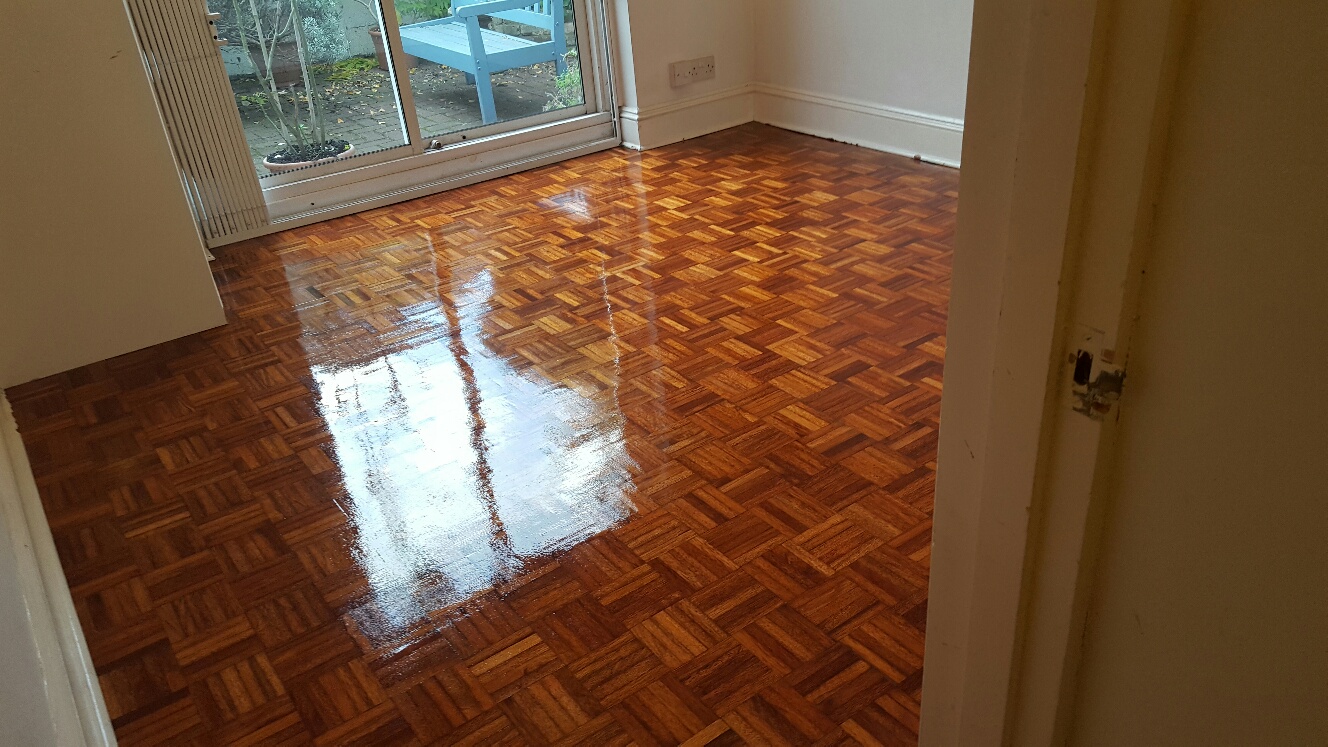
East London’s housing stock is idiosyncratic: finger-block parquet in 1930s flats, slender pine in Warner cottages, reclaimed oak in warehouses. A contractor who works daily in E17 understands board thickness, sleeper-wall damp, parking zones and conservation-area regulations. Neighbourhood crews can also pop back for snagging within hours—a perk that often matters more than saving fifty pounds.
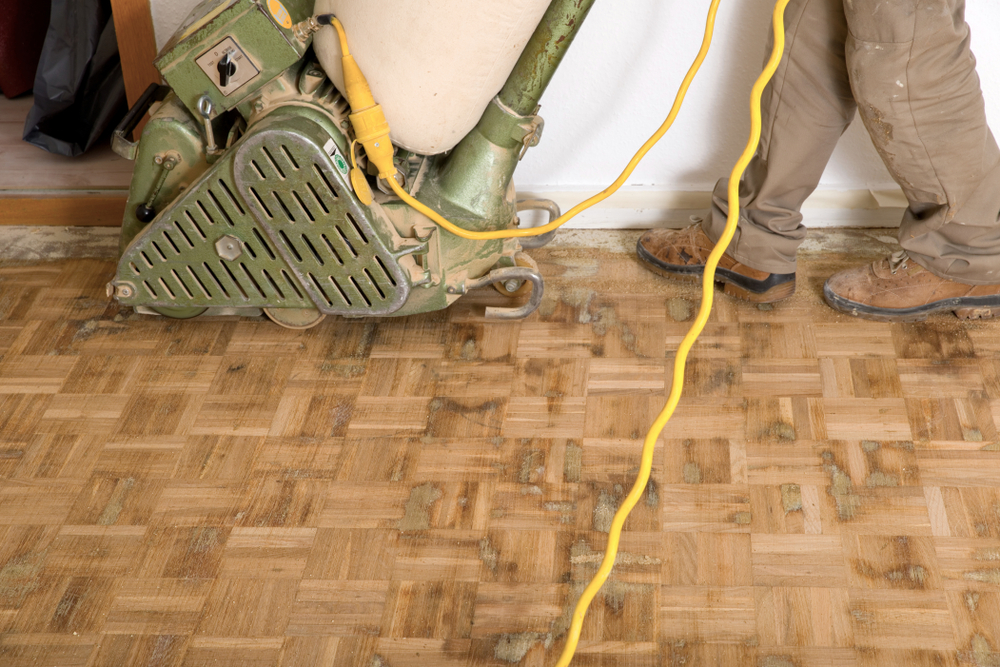
7. Red Flags and Common Mistakes
- Skipping the fine sand – Swirl marks appear after stain.
- Rushing coat intervals – Walking on uncured lacquer embeds grit.
- Under-estimating smell – Oil finishes emit odours for days.
- Using domestic vacuums – They spew micro-dust back.
- Unscreened subcontractors – Outsourcing dilutes accountability.
Stay on site during day one, ask questions, and stop work if something looks slapdash.
8. Preparing Your Home for Success
- Empty rooms completely.
- Remove lightweight doors.
- Label cable runs.
- Reserve a clean-up zone.
- Notify neighbours to reduce noise complaints.
9. Aftercare and Maintenance
A beautifully finished floor is only the beginning. The contractor should leave you with:
- Daily cleaning – Microfibre mop; avoid steam.
- Monthly refresh – Use pH-neutral cleaner from the same manufacturer.
- Annual inspection – A buff and re-coat is far cheaper than full Wood Floor Sanding.
- Felt pads & rugs – Rotate rugs to even UV exposure.
- Humidity control – Aim for 45–60 percent RH.
Apply these habits and your boards will still gleam when the next paint job rolls around.
10. Frequently Asked Questions
How long will the job take? – A 20 m² lounge: two days sanding, one day finishing, overnight cure.
Is it noisy? – Around 90 dB, similar to a lawnmower.
How many times can a floor be sanded? – Solid boards: four cycles; engineered planks: usually twice.
11. Case Study: Victorian Terrace on Hoe Street
Lucy and Alvin bought a three-bedroom Warner flat near Lloyd Park with original pine boards under threadbare carpet. After three quotes they selected a BWFA-accredited firm. The project cost £1,450 for 28 m² over four days, culminating in two coats of satin lacquer. Friends now assume the boards are brand-new Scandinavian planks, while the couple cherish the tiny knots that reveal their history.
12. Finish Selector Cheat-Sheet
| Lifestyle | Look | Durability | Re-coat | Notes |
|---|---|---|---|---|
| Young family & pets | Neutral matt | ★★★★☆ | 5–6 yrs | 2-part water-based lacquer, low odour |
| Professional couple | Silky gloss | ★★★★★ | 7–8 yrs | Solvent lacquer, mirror sheen |
| Vintage enthusiast | Rustic oil | ★★★☆☆ | 2–3 yrs | Hard-wax oil, easy repairs |
| Allergy sufferer | Ultra-low VOC | ★★★★☆ | 4–5 yrs | Zero-solvent finishes |
| Rental property | Mid-sheen | ★★★★☆ | 4–5 yrs | Commercial-grade lacquer |
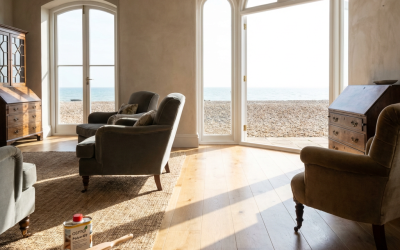
Always request overnight samples under your room’s lighting.
13. Timing Your Project: A Practical Planner
- Book ahead: Skilled crews often have six-week lead times.
- Seasonal advantage: Summer warmth speeds cures; winter slows drying but reduces pollen.
- Trade order: Plastering and electrics before sanding; painting after.
- Furniture storage: Large suites in self-storage save time.
Plot these variables on a calendar to keep renovations stress-free.
14. Environmental Considerations
Modern restoration can be exceptionally eco-friendly:
- Low-VOC finishes – a fraction of old varnish solvents.
- Recyclable abrasives – biodegradable resins.
- Waste sawdust – often up-cycled into animal bedding or biomass fuel.
- Energy-efficient motors – new sanders cut electricity use by 30 percent.
Ask each firm how they minimise carbon footprint.
15. DIY vs Professional: Crunching the Numbers
Renting a sander for the weekend seems thrifty, yet a 15 m² lounge still costs £250 in hire, abrasives, masks and sealant—plus your entire Sunday. Pros quote around £550, finish in a day, and give a warranty. Factor in resale value, guaranteed flatness, and zero marital arguments, and professional help looks like a bargain!
Conclusion:
Few home improvements deliver the daily pleasure of stepping onto freshly revived timber. Whether you live in a Warner cottage, a modern apartment, or a Victorian terrace, a properly executed refinish will make your rooms look brighter, feel cleaner, and sound quieter. Choose wisely and enjoy the transformation for decades.